Brand credibility is the foundation that determines whether customers trust your business enough to buy from you.
Without a solid foundation of trust, even the best products won't convince skeptical buyers to choose your brand over competitors. People simply won't hand over their money to brands they don't trust.
However, building credibility takes consistent effort across everything you do, from marketing communications to customer service. This isn't something you can fake or shortcut your way through.
After years of working with service businesses on their digital presence, we've seen how building brand credibility changes customer relationships and drives real growth. And we're going to break down exactly how you can do it in this article.
You'll learn:
- The meaning of brand credibility and why it drives sales
- How credibility directly impacts brand perception and buying decisions
- Specific strategies to earn trust with your target audience
- Ways to measure and track perception improvements
Keep reading to build a brand people actually trust.
What Is Brand Credibility?

Put simply, brand credibility refers to how much people believe your business will deliver on its promises consistently. It's the reason some brands get chosen immediately while others get ignored, even when their products look similar.
Let's break down what this means and what makes a brand credible:
Brand Credibility Definition
You probably see ads from dozens of companies every single day. Some you scroll past without a second thought, while others catch your attention because you recognize the name and trust what they offer. That's brand credibility doing its job.
Brand credibility combines three main elements:
- Expertise (knowing your field inside and out)
- Trustworthiness (being honest and reliable in every interaction)
- Likability (connecting with your audience authentically)
You need all three working together. A brand might have deep expertise but lose credibility if buyers find it dishonest. Or a likable brand might struggle if it doesn't demonstrate real knowledge.
Worth Noting: Strong credibility makes customers feel confident choosing your brand, even when they haven't purchased from you before. Their confidence comes from seeing consistent proof that you deliver what you promise.
Credible Brand Characteristics
Credible brands follow through on commitments, communicate honestly about products, and admit mistakes when they happen (we've all been there). They don't oversell or make promises they can't keep. When something goes wrong, they own it and fix it quickly.
The truth is, people recognize credible brands by consistent quality, transparent business practices, and authentic engagement across all touchpoints. The experience stays the same whether someone visits your website, calls your office, or walks into your location.
That consistency builds the perceived quality and perceived expertise that separates credible brands from forgettable ones.
How Does Brand Credibility Affect Brand Perception?
Your brand's credibility directly determines how clients view your business and affects their buying decisions. The moment people start to trust your brand, they see everything you do through a more positive lens.
They find your marketing helpful instead of pushy. Also, customers praise the experience instead of criticizing. This shift in how clients perceive your business has a positive impact on everything from conversion rates to word-of-mouth referrals.
See how credibility impacts different aspects of brand perception:
- Positive Brand Perception: When people view your business favorably, they're more willing to try new products, forgive occasional mistakes, and recommend you to others without hesitation.
- Negative Brand Perception: Without credibility, even your best efforts get viewed skeptically. One bad experience spreads through online reviews and social media, and those negative comments influence a significant number of purchase decisions.
- Overall Brand Perception: This combines every interaction, review, and experience customers have with your business. Strong brand credibility creates consistency across all these touchpoints, which influences how people perceive your entire brand.
- Customer Trust Levels: High trust means buyers move quickly through buying decisions. Meanwhile, low trust means they hesitate, comparison shop endlessly, or walk away completely before making a purchase.
- Impact on Purchase Decisions: Customers won't risk their money on brands that feel unreliable. Brand credibility shortens the decision-making process and helps you convert more browsers into buyers, even at higher price points.
Bottom Line: Positive brand image starts with credibility. If someone perceives your brand as trustworthy and reliable, everything else gets easier. They choose you faster, stick with you longer, and tell others about their positive image of your business.
Why Is Brand Credibility Important for Customer Loyalty?

Brand credibility is the foundation of customer loyalty because people only return to businesses they trust. In fact, 81% of consumers say they need to trust a brand before buying from it.
Here's how strong credibility protects your brand's reputation and builds lasting customer relationships:
Customer Loyalty
The fact is, loyal customers spend more over time, forgive occasional mistakes, and stick with brands during competitive pressure or price increases. They develop an emotional connection that goes beyond transactions.
Customer loyalty also means your existing customer base becomes more valuable. Instead of constantly chasing new buyers, you're building deeper relationships that increase market share and protect your revenue.
Brand Advocacy
In our experience, credible brands create advocates from satisfied customers who recommend products to friends, family, and professional networks without prompting. These brand advocates defend your business during criticism, create user-generated content, and provide authentic testimonials that influence potential clients.
Keep in Mind: Advocacy grows organically when customers genuinely believe in your brand and want others to benefit from your products. This positive word of mouth brings in new consumers at zero acquisition cost and often outperforms paid advertising.
After understanding why credibility is important, it's time to look at the practical strategies you can use to actually build it.
How Can Brands Build Credibility?
Building brand credibility requires consistent actions across your marketing, customer service, and product delivery. Honestly, there's no single tactic that magically creates trust overnight. You need multiple strategies working together to prove you're reliable.
However, rather than requiring huge budgets, most of these strategies just need commitment to doing what you say you'll do (every single time).
Follow these methods to build trust with your target audience:
- Brand Credibility Strategy: Start with a clear plan that defines your brand promise, values, and how you'll demonstrate expertise everywhere consistently.
- Brand Promise and Values: Tell people exactly what they can expect from you. Then deliver on that promise without exception while your values guide every business decision you make.
- Authentic Engagement: Genuine conversations on social media build trust far better than polished corporate posts. So respond thoughtfully to comments, questions, and concerns without sounding scripted, and add a human touch to every interaction.
- Marketing Communications Consistency: Your messaging, tone, and visual identity should stay consistent across all channels so consumers recognize and trust your brand immediately (no matter where they find you).
- Valuable Content Creation: The content you share should educate your ideal audience and solve real problems. For instance, share high quality products information, answer common questions, and position yourself as a thought leader without relying on industry jargon or the hard sell.
These strategies work together to build credibility that potential customers can see and feel across every interaction with your brand.
How Do Exceptional Customer Experiences Build Credibility?

Exceptional customer experiences build credibility by proving your brand delivers on its promises through consistent, high-quality interactions. Every touchpoint creates an opportunity to either strengthen or weaken credibility.
When you deliver exceptional customer experiences repeatedly, they notice the pattern and develop confidence in your reliability.
Two connected practices build this trust:
1. Consistent Service Delivery
Delivering the same high-quality experience across all interactions builds predictability and strengthens trust in your brand. In other words, customers feel comfortable when they can count on getting the same level of care whether they call, email, visit your location, or message on social media.
Consistency also means maintaining service standards during busy periods, across different locations, and with various team members handling requests. That’s why regular quality checks are essential to ensure no customer experience slips through the cracks.
2. Meeting Customer Expectations
What happens when you consistently meet customer expectations without surprises or disappointments? Well, people start to rely on you.
That trust builds when you understand what they expect and deliver on those expectations consistently. This starts with setting realistic expectations upfront through clear communication about what customers can expect from the beginning.
Helpful Tip: Clear communication about delivery times, product features, and service limitations prevents disappointment and helps manage customer perception from the first interaction.
How Does Customer Feedback Influence Brand Credibility?
Customer feedback affects brand credibility by showing how well you listen and respond to what people need. When you actively collect feedback and act on it, people see proof that their opinions influence your business decisions.
The thing is, feedback comes in many forms, including customer testimonials, online reviews, survey responses, and social media comments. Each type serves a different purpose in building credibility:
| Feedback Type |
Primary Purpose |
Impact on Brand Credibility |
Where It Appears |
| Customer Feedback Collection |
Gather customer opinions and pain points |
Shows brands listen to customers |
Surveys, forms, support tickets |
| Customer Testimonials |
Highlight real customer experiences |
Builds trust through social proof |
Website, case studies, landing pages |
| Feedback-Driven Product Changes |
Improve products based on feedback |
Demonstrates commitment to improvement |
Product updates, release notes, roadmaps |
| Response to Customer Feedback |
Acknowledge and address feedback |
Reinforces transparency and accountability |
Review platforms, email, and social media |
All these feedback types strengthen your credibility in different ways. But in this section, we'll cover the three most impactful approaches below.
Customer Feedback Collection
Based on our experience, regular feedback collection allows businesses to identify problems and reveal opportunities to improve products or services. Also, making feedback easy to provide through surveys, email follow-ups, and support interactions shows you're committed to understanding customer data and acting on it.
And the best part is that happy customers appreciate being asked for their input. It makes them feel valued and strengthens their connection to your brand.
Customer Testimonials
Did you know that 74% of consumers read at least 2 reviews before deciding to trust a business? Yes, you read that right. Buyers need to see social proof before pulling out their wallets.
Real customer testimonials provide social proof that validates your brand promises and reassures potential buyers. These authentic reviews carry weight because they come from actual users who have nothing to gain from recommending you.
Useful Tip: Specific testimonials highlighting particular benefits or outcomes work better than generic praise for building credibility with prospects. Display them prominently on your website and landing pages, where new customers can see real experiences from satisfied customers.
Feedback-Driven Product Changes
User-generated content and direct feedback reveal what buyers want versus what you think they want. When you implement improvements based on customer suggestions, you show commitment to meeting evolving needs. This proves that their voices directly influence your business decisions.
So ultimately, your product updates addressing common complaints or requests create positive perception shifts among both existing and new customers considering your brand.
Once you've built systems to collect and act on feedback, the next challenge is maintaining that credibility over the long term.
How Can Brands Maintain Brand Credibility Over Time?
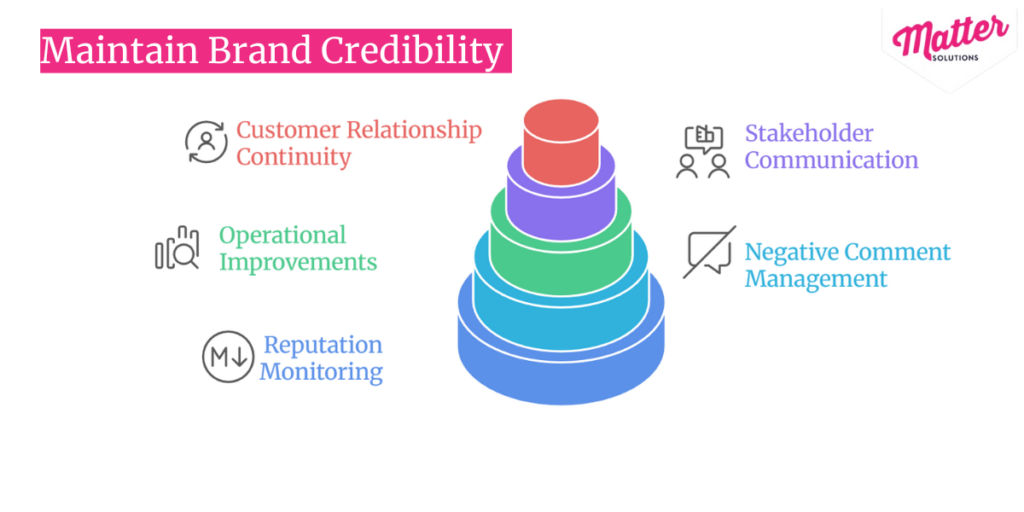
Maintaining brand credibility requires ongoing monitoring, transparent communication, and quick responses when problems arise. This is where most people go wrong: they think building credibility is a one-time project instead of an ongoing commitment.
Brand credibility isn't something you achieve and forget about. It needs constant attention because one misstep can undo years of trust-building work.
So follow these practices to protect and strengthen brand credibility:
- Reputation Monitoring: What people say about your brand across online reviews, social media, and online conversations directly impacts your credibility. That's why you need to track mentions regularly so you can spot problems early and address them before they spread.
- Managing Negative Comments: Quick, professional responses to criticism on social media and review platforms show you care about fixing problems. Own your mistakes, explain how you're fixing them, and take negative comments seriously instead of ignoring them.
- Operational Improvements: Feedback should drive continuous improvement in your products, services, and processes. Even small upgrades based on customer input prove you're committed to getting better over time.
- Stakeholder Communication: If you want to build lasting trust, keep employees, customers, and partners informed through transparent updates about changes, challenges, and wins. This is how you sustain credibility across your entire audience.
- Customer Relationship Continuity: Staying connected with your customer base through regular communication, personalized service, and consistent follow-through on promises maintains the relationships.
While maintaining credibility takes work, the payoff is loyal customers who stick with you through challenges and changes.
How Can Brands Measure Brand Perception?
Brands can measure brand perception through surveys, Net Promoter Score tracking, social media monitoring, and online review analysis. These methods help you understand how customers perceive your business versus how you want to be seen.
Without tracking these key metrics, you're guessing whether your credibility-building efforts are working or falling flat.
Here are the two most reliable ways to track how people perceive your brand:
Brand Perception Surveys
Surveys reveal exactly how customers see your brand compared to how you want to be seen. Regular brand perception surveys measure how people view your qualities, values, and position compared to competitors in the market.
They also help you spot perception gaps early, before they become bigger problems. So use survey insights to guide your credibility-building efforts by revealing which brand attributes need strengthening or better communication.
Net Promoter Score (NPS)
Using just one direct question, Net Promoter Score evaluates how likely people are to refer your brand to others. The score reveals overall brand health and loyalty levels, with promoters indicating strong credibility and detractors signaling trust issues.
Over time, tracking NPS shows whether credibility-building efforts are working and highlights areas needing immediate attention. It's one of the fastest ways to gauge customer perception and measure brand perception changes.
Key Takeaways for Building and Maintaining Brand Credibility
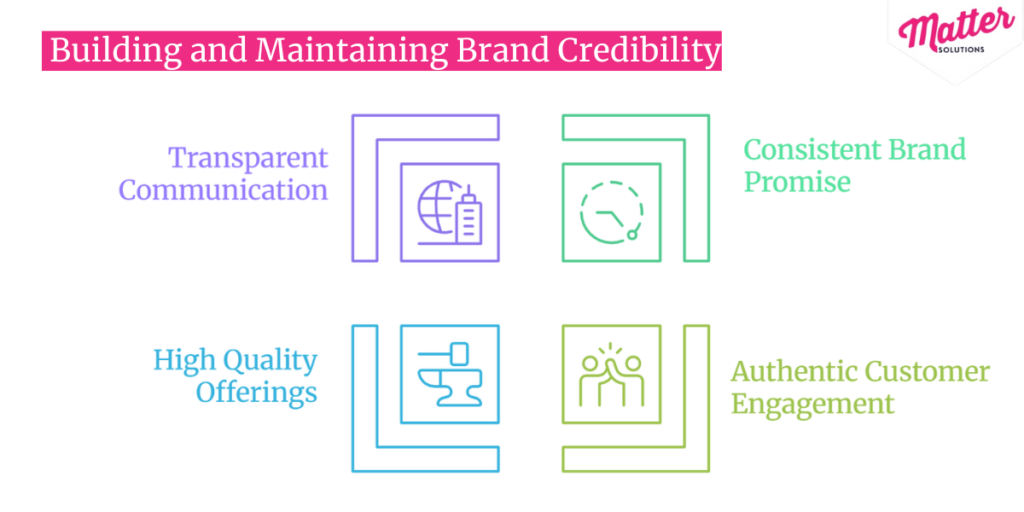
Now that you understand what builds credibility, let's recap the most important factors for long-term success. In a nutshell, building brand credibility comes down to consistency, authenticity, and following through on what you promise.
These key takeaways will help you stay focused on what drives customer trust and positive brand perception:
Core Trust Factors
Four core factors (consistent promises, authentic engagement, quality offerings, and transparent communication) determine whether customers will trust your brand enough to make a purchase.
So get these key factors right, and everything else becomes easier:
- Consistent Brand Promise: Deliver the same quality and experience every single time so people know exactly what to expect when they choose your brand.
- Authentic Customer Engagement: Real conversations and genuine responses build stronger connections than polished corporate messaging ever could.
- High Quality Products or Services: Your offerings need to actually solve problems and deliver real value, not just look good in marketing materials.
- Transparent Communication: Honest updates about challenges, changes, and wins build trust faster than trying to appear perfect all the time.
The better you execute these factors, the stronger your powerful foundation for lasting credibility becomes.
Common Credibility Mistakes
Some common mistakes damage your credibility without you even realizing it's happening. Watch for these warning signs and identify areas where your brand might be slipping:
- Inconsistent Brand Messaging: Saying one thing on social media and another on your website confuses people and makes them question what you stand for. So try to consistently deliver the same message and create content that aligns across all channels.
- Ignoring Customer Feedback: When buyers share opinions or complaints and hear nothing back, they assume you don't care about their experience. It sends a message that their voice doesn't matter.
- Overpromising and Underdelivering: Setting unrealistic expectations might win the sale today, but it destroys credibility and creates negative word of mouth tomorrow.
- Poor Response to Criticism: Defensive reactions or ignoring negative comments on review platforms tells potential customers you can't handle problems professionally.
Trust us, avoiding these mistakes protects the credibility you've worked so hard to build.
Long-Term Credibility Priorities
Maintaining credibility over the years requires focusing on relationships and adapting to what buyers expect from modern brands.
Keep these priorities front and center:
- Ongoing Reputation Oversight: Regular monitoring of online conversations, reviews, and social media mentions helps you catch issues before they damage your brand's reputation permanently.
- Strong Customer Relationships: Staying connected through personalized service and consistent follow-through maintains the emotional connection and gives you a better understanding of what keeps loyal customers coming back.
- Adapting to Customer Expectations: What people expected five years ago differs from today's standards. So stay current with evolving customer pain points to maintain a positive perception.
A strong foundation of credibility today sets you up for sustainable growth and customer loyalty tomorrow.
Building Trust That Lasts
Brand credibility isn't built overnight, but every interaction with customers either strengthens or weakens the trust you're working to create. The brands that succeed long-term are the ones that show up consistently, communicate honestly, and actually deliver on what they promise.
Start by focusing on the basics: deliver quality products, respond to feedback, and keep your messaging consistent across every channel. These simple actions build the solid foundation that creates loyal customers who trust your brand enough to recommend it to others.
Still struggling to build credibility with your audience? Then contact our team at Matter Solutions. We specialize in digital marketing strategies that strengthen brand perception and help service businesses earn the trust they need to grow.
Your brand's reputation depends on the trust you build today. Make every interaction count.